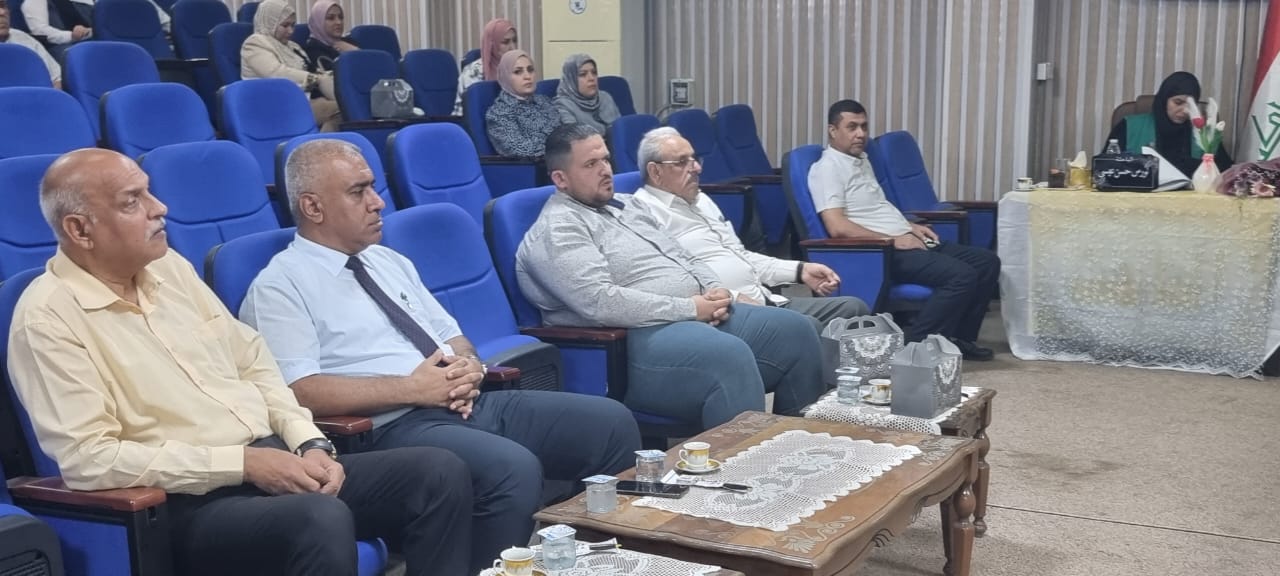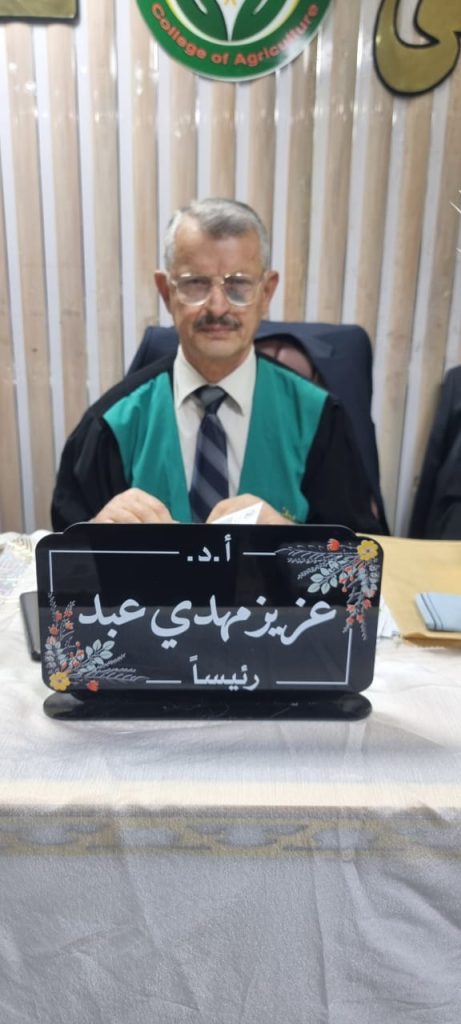
A Doctoral Dissertation at the College of Agriculture Investigates the Early Molecular Detection of Tannin and Vicine in Faba Bean Varieties and Evaluates Their Hybrids Under Different Levels of Amino Acid Foliar Application.

The College of Agriculture at the University of Diyala Discussed a Doctoral Dissertation Entitled:
“Early Molecular Detection of Tannin and Vicine in Faba Bean (Vicia faba L.) Varieties and the Evaluation of Their Hybrids Under Different Levels of Amino Acid Foliar Application.”
The study, presented by Nawras Hussein Issa, aimed to conduct early molecular detection of tannin and vicine/convicine in various genetic structures in order to identify and prioritize those with low content of these compounds for integration into breeding programs. The research also sought to explore molecular markers for genetic diversity, define the genetic fingerprint of selected genotypes, and estimate genetic distances among them to inform a reciprocal hybridization program involving genotypes characterized by low tannin and vicine/convicine content and broad genetic divergence.
The study reached several key conclusions, including:
-
The RAPD (Random Amplified Polymorphic DNA) technique demonstrated high efficiency in distinguishing between genetic structures based on banding patterns associated with tannin and vicine levels. It proved useful in identifying molecular markers suitable for use in selection programs aimed at improving quality traits, thus underscoring the value of molecular tools in supporting traditional breeding approaches.
-
The SSR (Simple Sequence Repeat) technique excelled in identifying genetic variation among faba bean varieties, making it a promising method in breeding programs for selecting genetically distant parents, with the goal of producing hybrids exhibiting high heterosis, vigorous growth, and enhanced yield performance.
-
Foliar application of arginine at a concentration of 250 mg/L led to notable improvements in biochemical parameters, vegetative and floral traits, as well as yield and its components.
-
Parent 4 (the local Iraqi variety Kurtania) was identified as a promising genotype due to its high general combining ability for most of the studied traits.
-
The results showed a higher broad-sense heritability compared to narrow-sense heritability across most traits, indicating substantial genetic variation—particularly due to dominance genetic variance over additive variance. This suggests that dominant gene action plays a major role in the inheritance of these traits.
The study recommends:
-
Utilizing the SSR technique as an effective tool for assessing genetic diversity among genotypes, thereby facilitating the selection of genetically distant parents to enhance heterosis in resulting hybrids.
-
Integrating molecular analysis with conventional phenotypic evaluation in genetic improvement programs to reduce time and effort while increasing the accuracy of selection for desirable traits.
-
Conducting experiments using additional amino acids such as glycine, proline, or glutamine to assess the response of new hybrids, and to determine their impact on improving vegetative, floral, biochemical, and yield traits—potentially expanding the toolbox of effective bio-stimulants in enhancing faba bean performance.
Finally, this scientific discussion contributes directly to the achievement of one of the United Nations’ 17 Sustainable Development Goals (SDGs)—specifically, Goal 4: Quality Education.