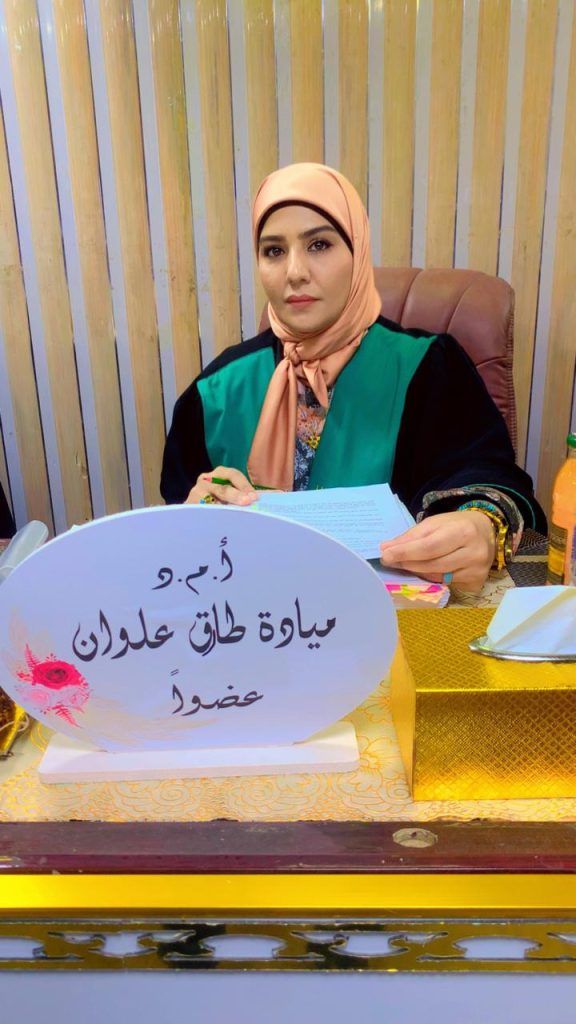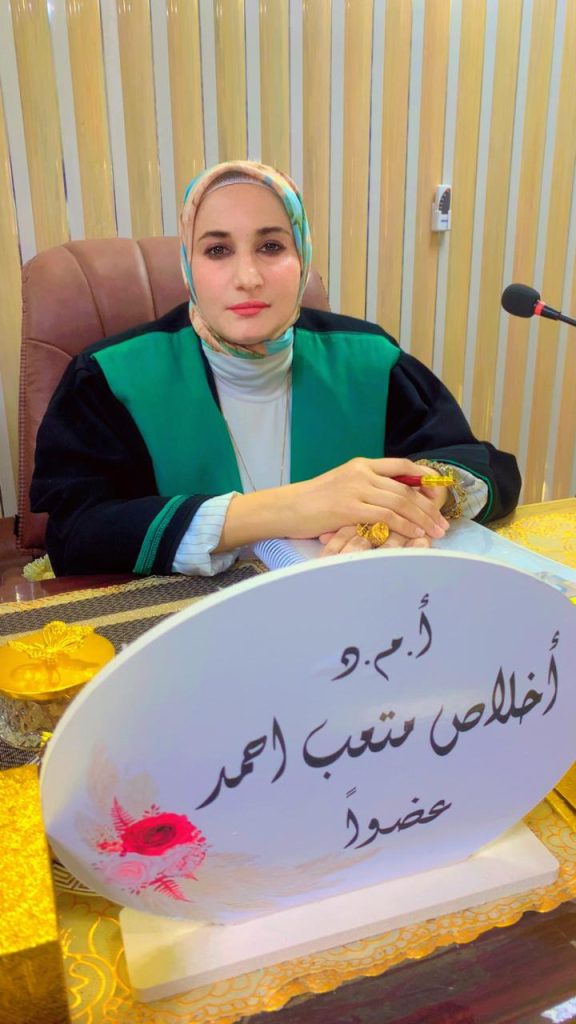
A Doctoral Dissertation at the College of Agriculture Explores the Micropropagation of Finger Lime (Citrus australasica), Production of Artificial Seeds, and the Estimation of Its Bioactive Compounds.

The College of Agriculture at the University of Diyala Discussed a Doctoral Dissertation Entitled:
“Micropropagation of Finger Lime (Citrus australasica F. Muell.), Production of Artificial Seeds, and Estimation of Its Bioactive Compounds.”
The study, presented by Nour Al-Huda Dawood Salman, aimed to achieve the micropropagation of finger lime (Citrus australasica F. Muell.) using tissue culture technology, to assess its effect on branch multiplication on MS medium. The study also involved the application of artificial seed technology by determining the optimal concentration of sodium alginate and identifying the best temperature and storage duration. Furthermore, the study sought to estimate certain secondary metabolites (phenolics, flavonoids, and alkaloids) in both field-grown mother plants and those produced ex vitro, using HPLC technique.
The study reached several important conclusions, including:
-
Contamination-free plant material was successfully obtained after sterilization, with the best response observed using 20% NaOCl for 15 minutes.
-
Single-node cultures treated with Kin (kinetin) outperformed those treated with BA (benzyladenine) in terms of growth.
-
The results indicated the need for an appropriate MS medium, supplemented with vitamins and 40 mg/L PVP + 100 mg/L myo-Inositol, to achieve optimal growth during the initiation and multiplication stages, and these additives helped reduce leaf abscission. This protocol serves as the foundation for finger lime micropropagation.
-
The black variety exhibited superior growth vigor and reduced leaf abscission when compared to the red and green varieties.
The study recommends:
-
Further studies to improve the success rates of micropropagation, with the aim of using this technique for the large-scale propagation of finger lime plants.
-
Expanding research on growth regulators and their interactions at varying concentrations to stimulate root initiation and growth.
-
Conducting experiments to stimulate the growth of somatic embryos from seeds and exploring their potential for in vitro propagation.
This scientific discussion contributes directly to the achievement of one of the 17 Sustainable Development Goals (SDGs), specifically Goal 4: Quality Education.