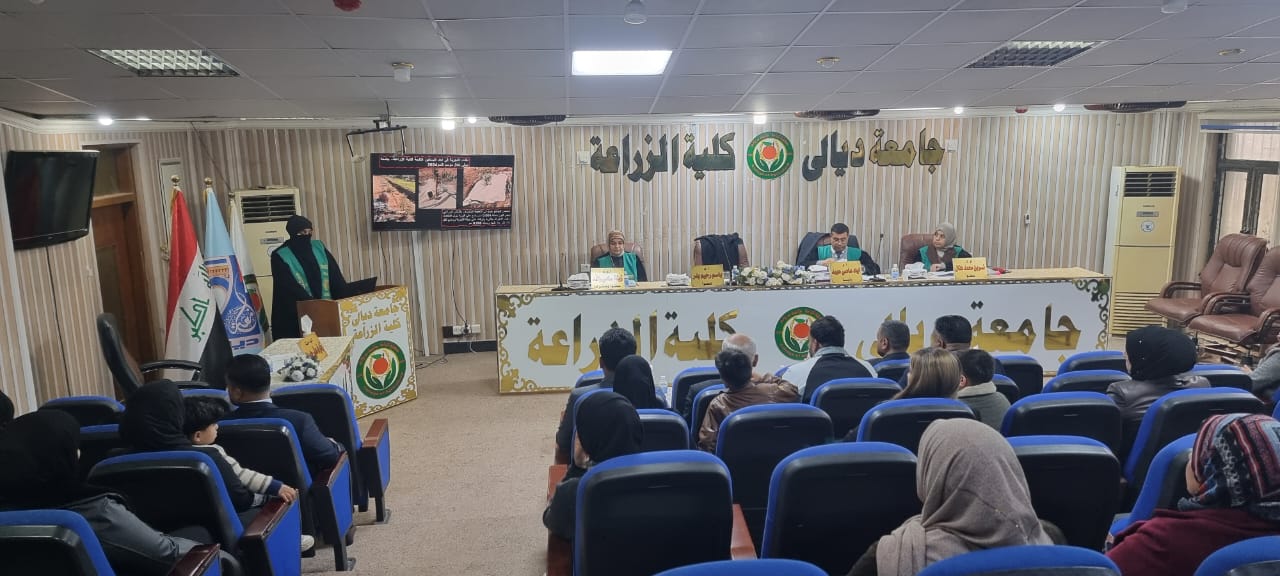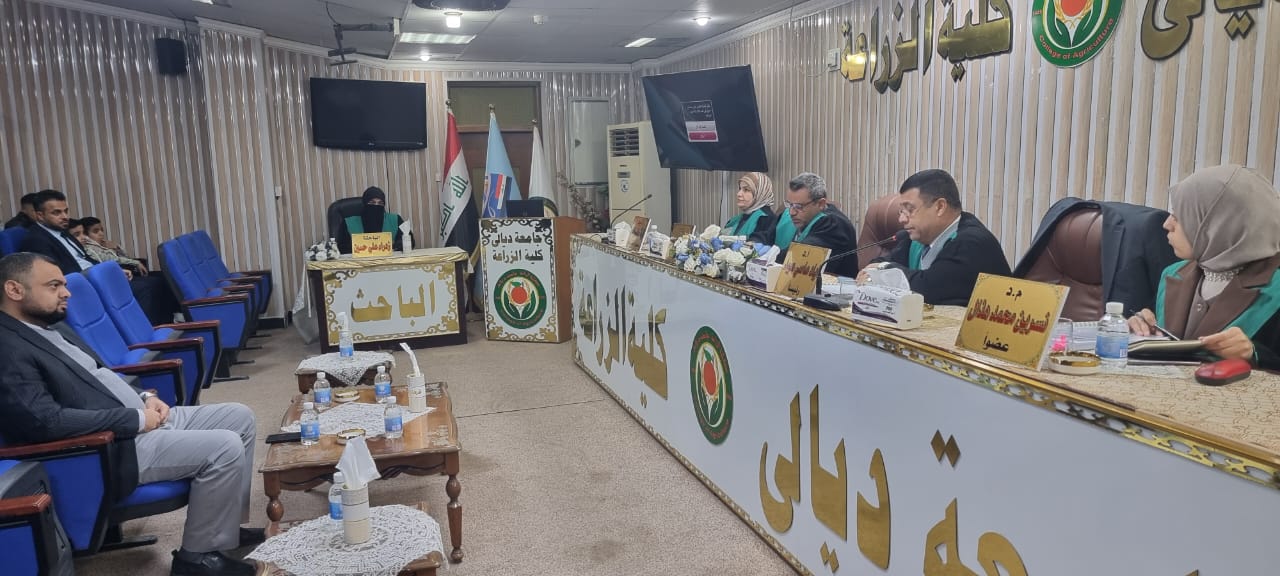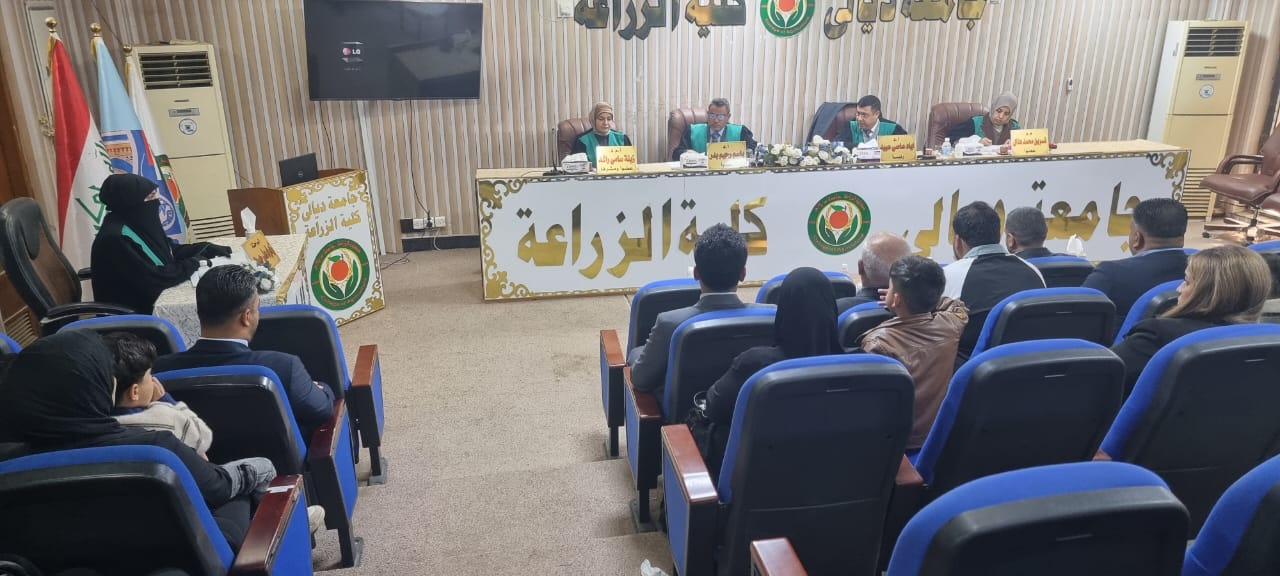
A Master’s thesis in the College of Agriculture entitled: “The Effect of Soil Mulching and the Application of Nano NPK Fertilizer and River Algae on the Improvement of Soil Properties and the Growth Performance of Three Olive Cultivars.”
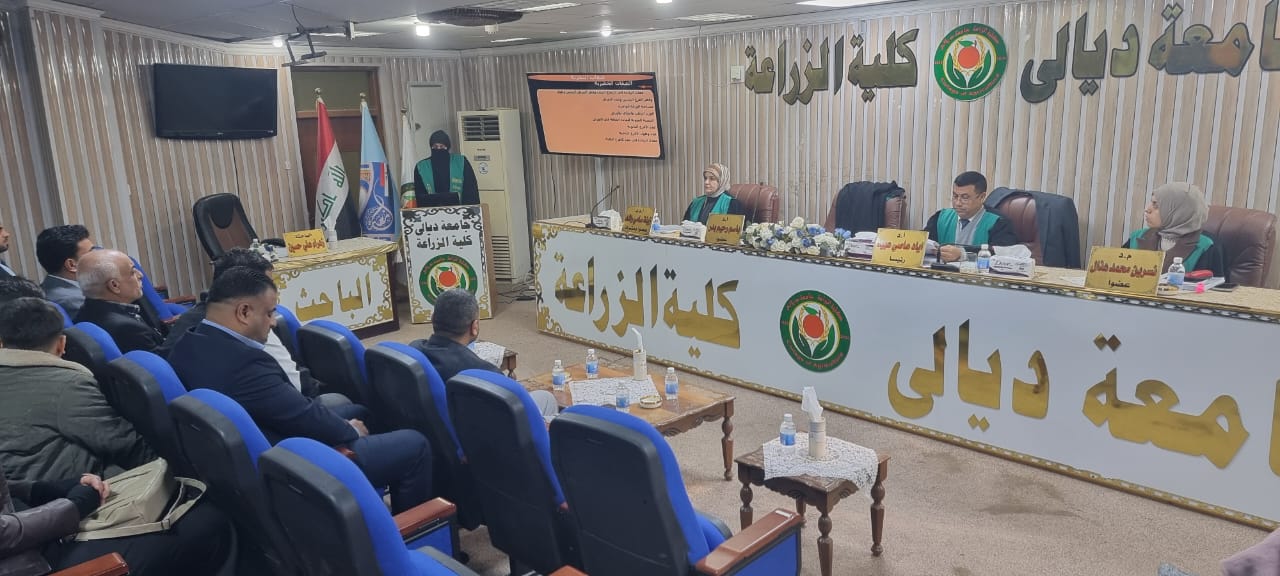
The College of Agriculture at the University of Diyala convened the defense of a Master’s thesis entitled “The Effect of Soil Mulching and the Application of Nano NPK Fertilizer and River Algae on the Improvement of Soil Properties and the Growth of Three Olive Cultivars.”
The experimental study, submitted by Ms. Zahraa Ali Hussein, examined three olive cultivars and incorporated three principal factors. The first factor comprised the cultivars (Arbequina, Baashiqah, and Improved Nabali). The second factor involved soil mulching using a sun-proof agricultural mesh (with and without mulching). The third factor concerned soil fertilization treatments (control, Shambelan, nano NPK, and a combination of Shambelan + nano NPK), with the objective of enhancing soil properties as well as vegetative, floral, and fruit growth characteristics of the cultivars under investigation.
The study arrived at several conclusions, most notably:
-
The cultivars exhibited variation in vegetative and chemical growth traits and differed in the extent of their response to soil mulching and fertilization treatments, attributable to genetic differences among them.
-
Soil mulching contributed to lowering soil temperature, maintaining suitable moisture levels within the root zone, and reducing moisture loss from the soil.
-
Positive relationships were observed in the two-way and three-way interactions among the study factors, yielding favorable results in many of the examined characteristics.
The study recommends conducting similar experiments on other cultivars to assess their responsiveness to the treatments investigated. It further advises undertaking additional studies to evaluate the response of other fruit seedlings to mulching practices. In light of the benefits of Shambelan in plant nutrition and soil improvement, and given its richness in essential organic nutrients beneficial to both plants and soil, the study recommends its adoption as an alternative to chemical fertilizers, while also contributing to the preservation of river water resources.
#College_of_Agriculture_Sustainability_Our_Methodology