A doctoral dissertation in the College of Agriculture entitled: *”Molecular Screening of Selected Local Male Date Palms and the Effect of Putrescine and Boron Treatments on Certain Growth and Yield Traits of the Al-Ashrasi Cultivar.”*

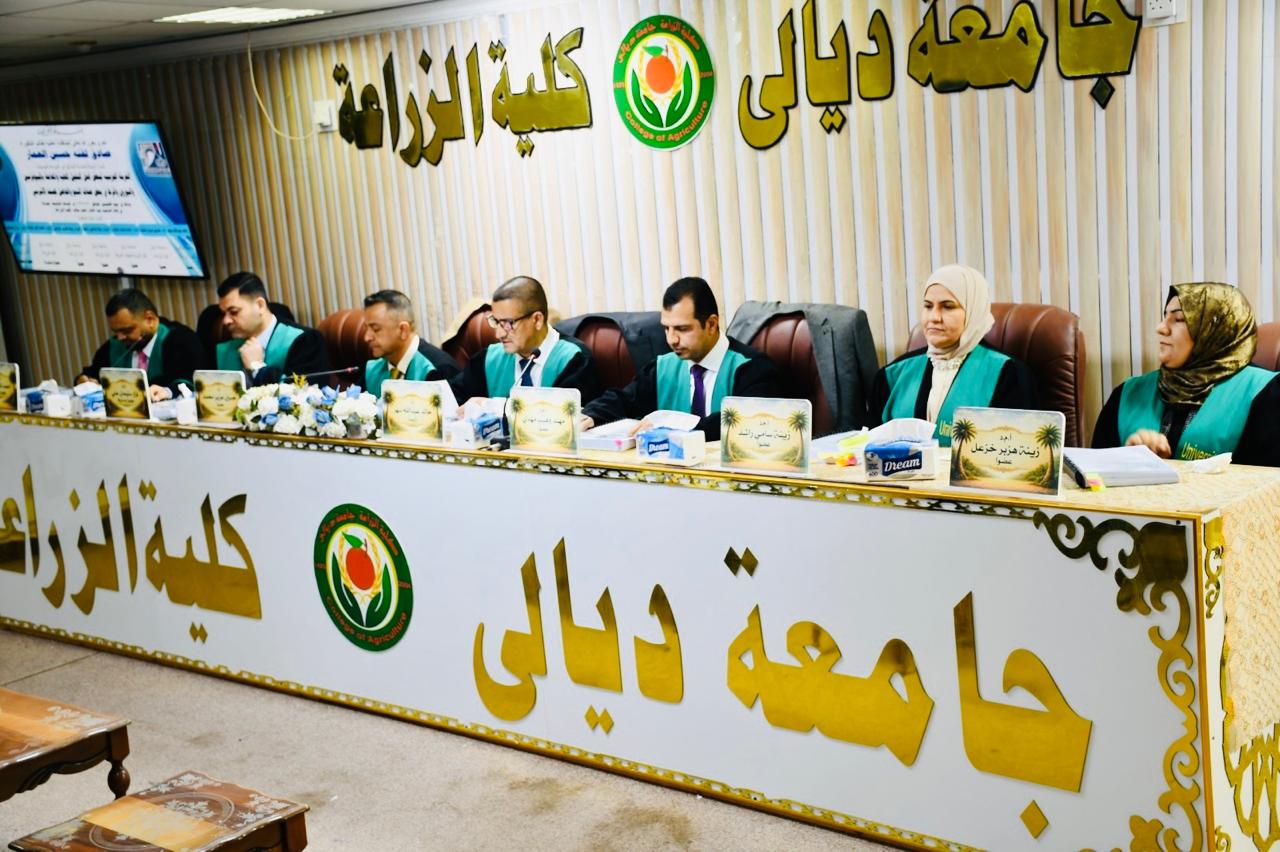
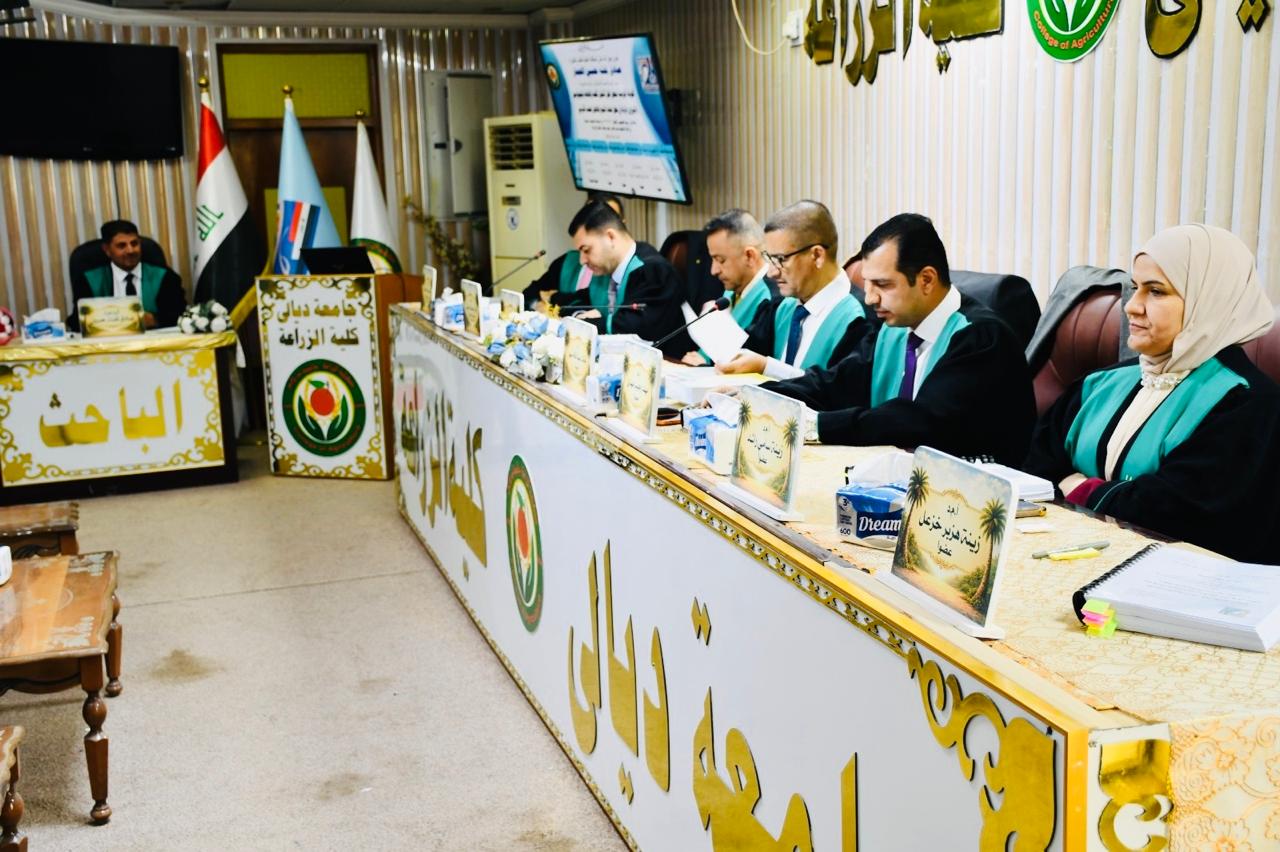
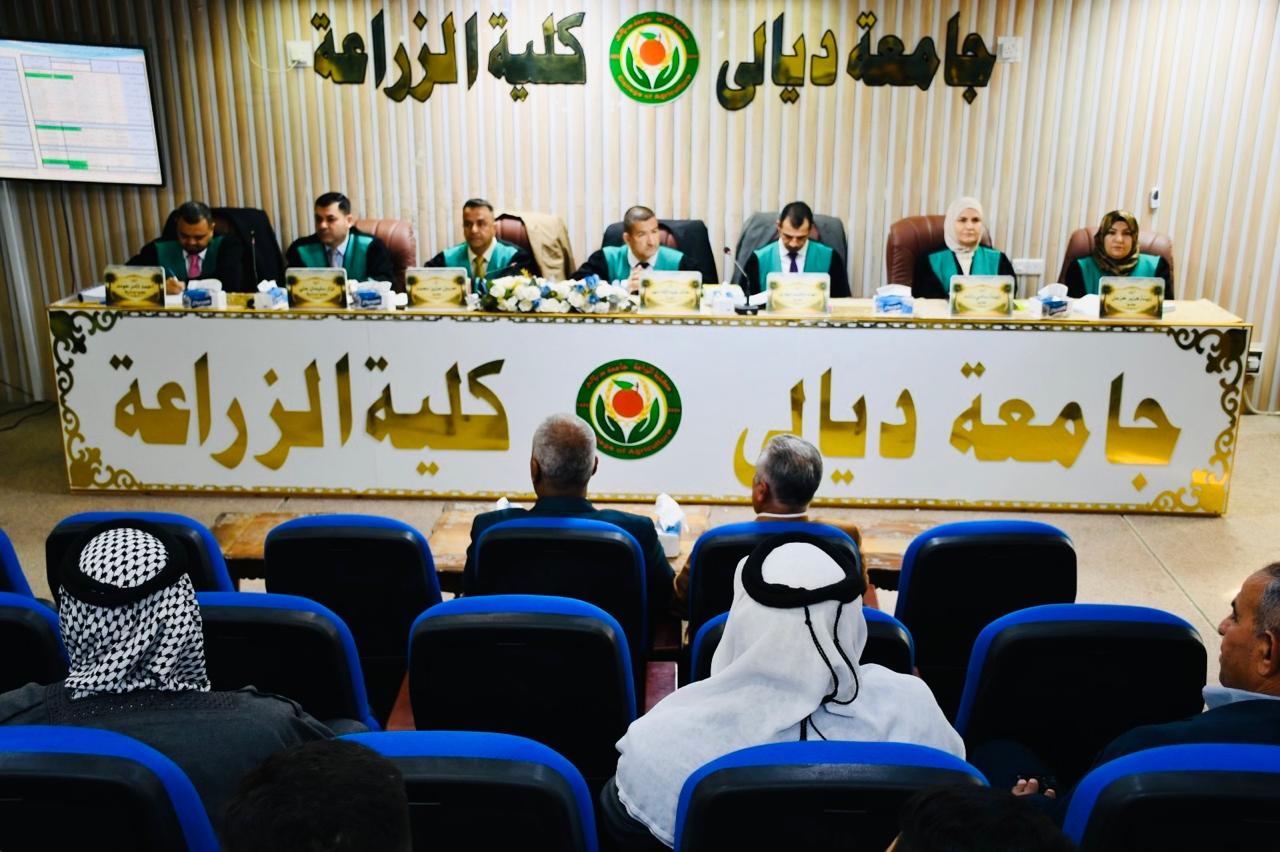
The College of Agriculture at the University of Diyala convened the defense of the doctoral dissertation entitled “Molecular Screening of Selected Local Male Date Palms and the Effect of Putrescine and Boron Treatments on Certain Growth and Yield Traits of the Al-Ashrasi Cultivar.”
The study, submitted by Mr. Sadiq Lafta Hussein, focused on the molecular screening of local male date palms cultivated in the Mandali district, establishing their genetic fingerprints, and assessing the genetic relatedness of their origins to enable systematic genetic screening, with the aim of cataloging the cultivars and standardizing their nomenclature.
The research encompassed fifteen male date palm cultivars, including both seedling varieties and locally established cultivars identified by their growers. These were: 1- Seedling 1, 2- Seedling 2, 3- Simismi, 4- Yellow Simismi, 5- Khadraoui, 6- Seedling 3, 7- Seedling 4, 8- Yellow, 9- Seedling 5, 10- Rasaasi, 11- Ghanami, 12- Al-Ashrasi, 13- Seedling 6, 14- Red Male, 15- Seedling 7.
The study reached several conclusions, including:
-
Most of the primers used exhibited distinct banding patterns (present or absent) for certain male palms—specifically 1, 3, 4, and 9—serving as their genetic fingerprint.
-
Selected male cultivars (4, 9, 6, and 11) had not been previously registered in the NCBI database, marking their registration as the first in Iraq.
-
Treatment with polyamines positively influenced the chemical traits of the fruits.
-
Foliar application of putrescine at concentrations of 100 and 200 mg L⁻¹ enhanced the studied growth and yield traits across both growing seasons.
The study recommends:
-
Employing ISSR-DNA technology to detect genetic diversity, establish genetic fingerprints, and assess the genetic distance among male date palm cultivars.
-
Applying boron at 200 mg L⁻¹ as a foliar spray on the vegetative canopy, as it produced clear and positive effects in improving the studied traits.
-
Repeating the experiment in other regions with different climatic and soil conditions to validate and expand the findings.
#College_of_Agriculture_Sustainability_Our_Methodology